Melbourne · from Sunday 4 November 1956
Tee Vee
Melbourne’s television began at seven o’clock on Sunday 4 November 1956. Ten years on there were television licences for seven homes in ten across Victoria, and the house had turned round to face the set: its chairs, its lamps, its meals and its children’s evenings. Derham Groves, born that year, wrote TV Houses about it.
1929–1964 · The first nights
Sunday 4 November 1956, seven o’clock
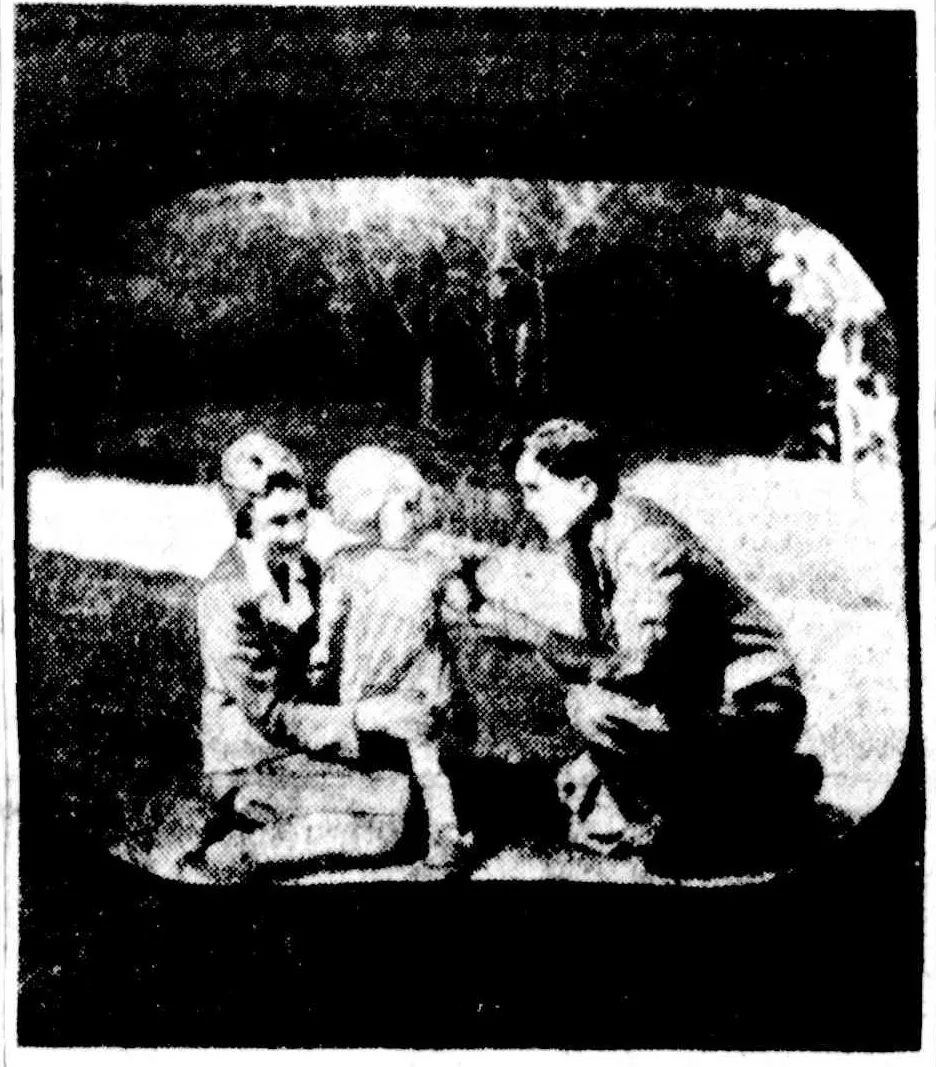
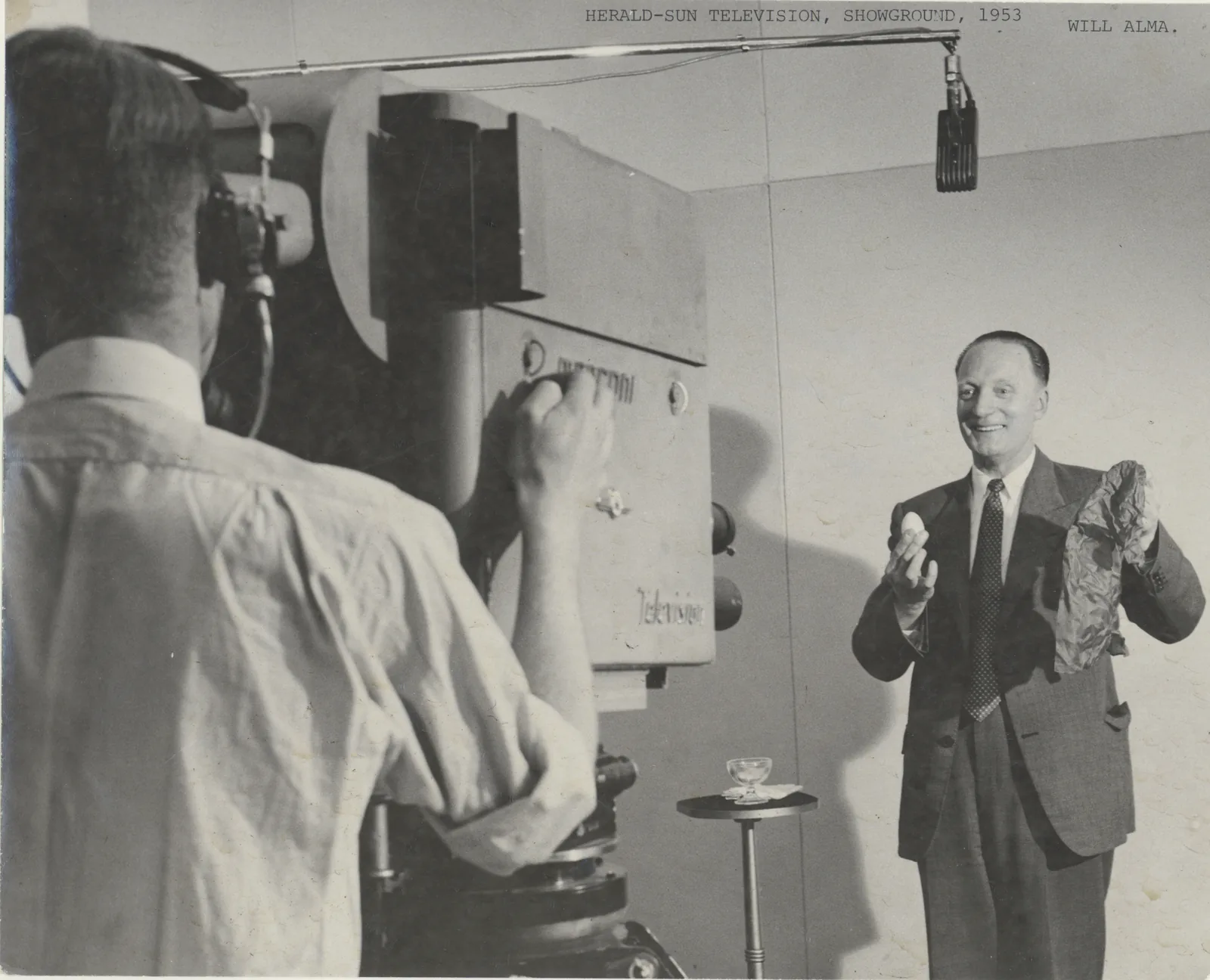
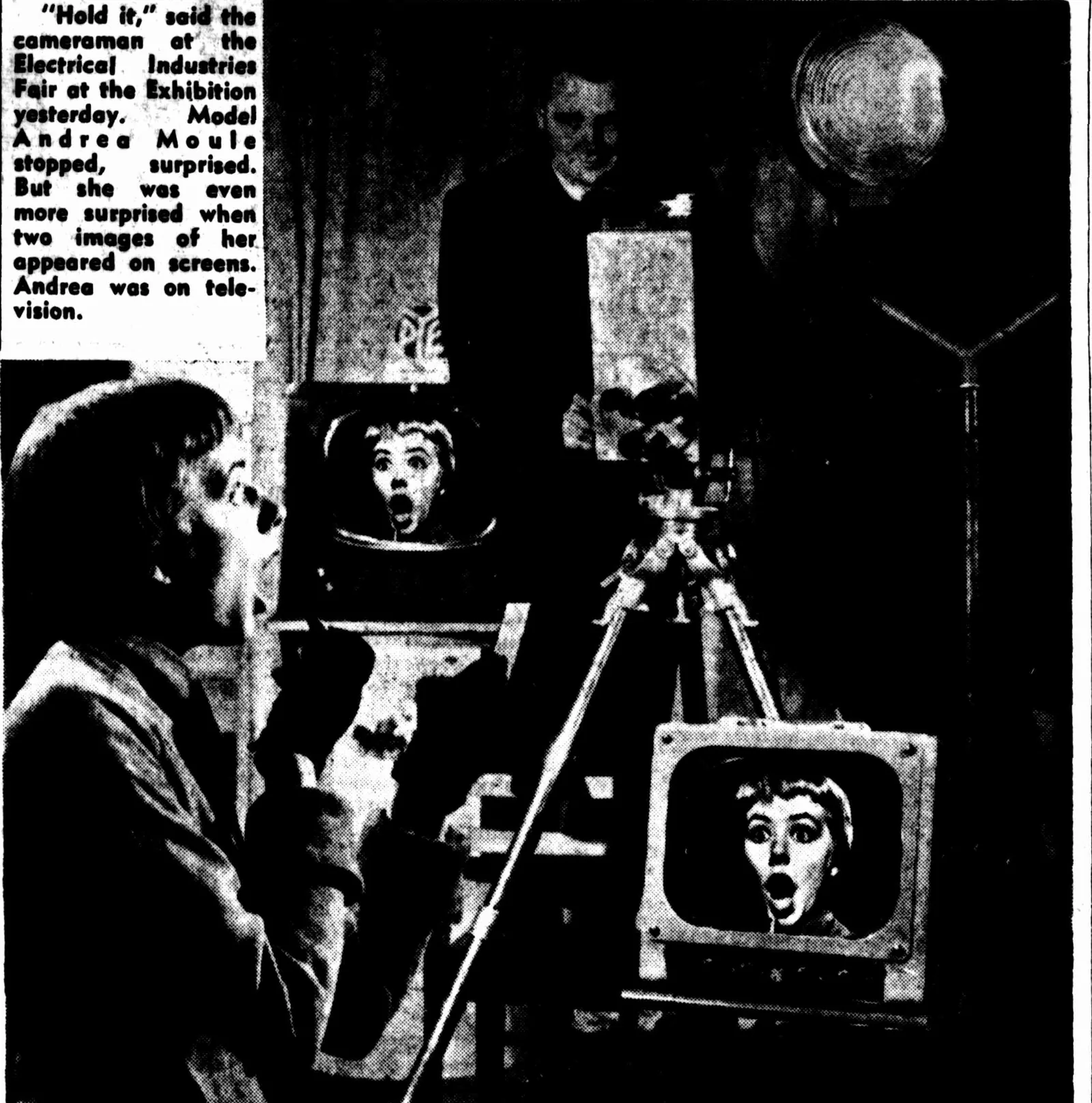
Melbourne waited a long time. In July 1929 The Argus photographed a Baird set “experimenting with a television receiving set in Melbourne”, and said that sets like it would be distributed shortly. Derham Groves puts the delay down to “technology, the Second World War, the economy, and a lack of political will”. In March 1949 Electronic Industries gave what The Herald called the first full-scale demonstration of television in Australia, a camera on a lawn at Brighton, and The Herald printed the screen on its front page; the Herald and Sun ran a television studio at the Royal Show in 1953 and 1954; and at the Electrical Industries Fair in October 1954 a model stopped in front of a camera and saw her own face on two screens.
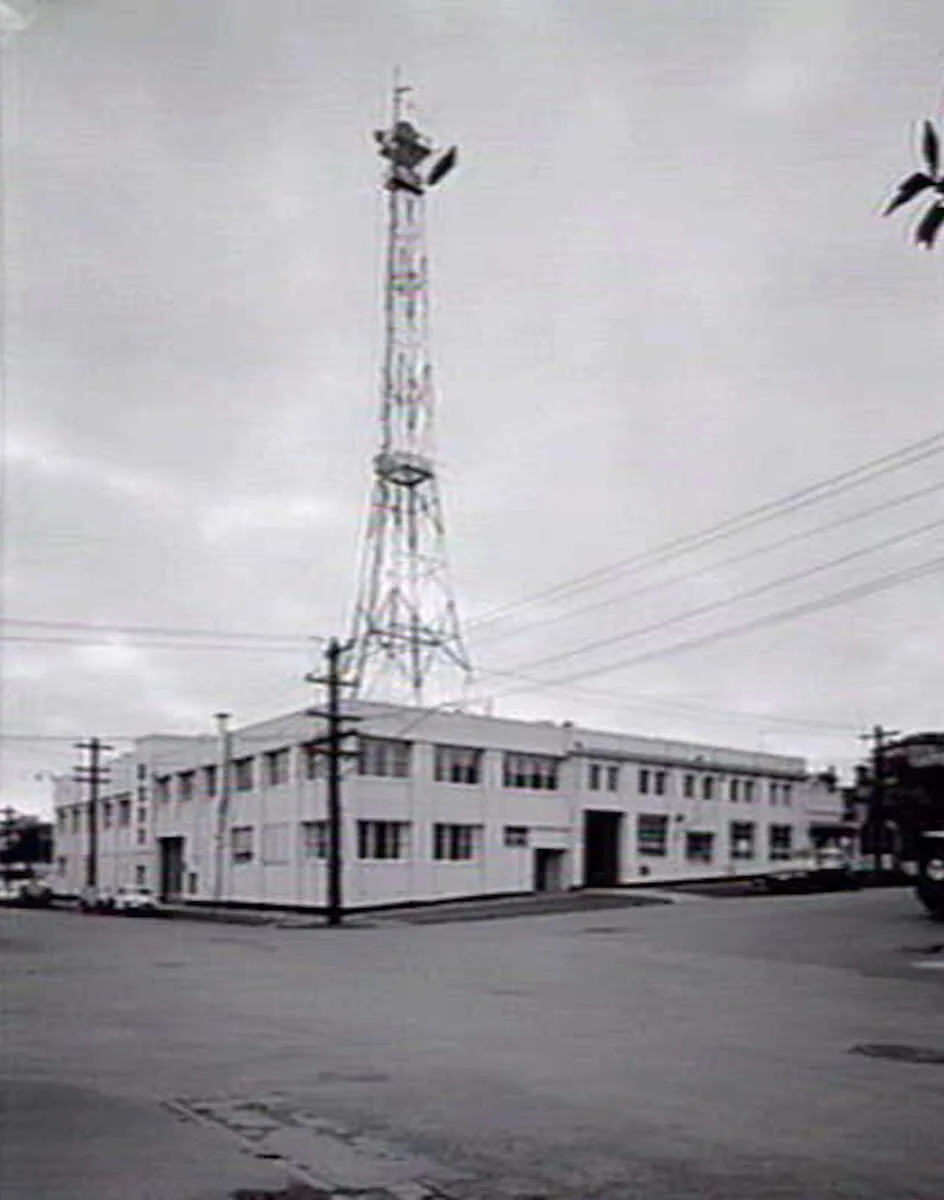
HSV-7, the Herald and Weekly Times’s station, had been sending out its test pattern from Mount Dandenong since July; on the evening of 17 July it replaced it, unannounced, with a picture of Spencer Street bridge and the letters HSV. At seven o’clock on Sunday 4 November 1956 the Premier, Henry Bolte, opened it from the studios in Dorcas Street. Scenes from the Tivoli’s Olympic Follies came next, then Robin Hood, I’ve Got a Secret with Eric Pearce as compere, Our Miss Brooks and the World News Round-up, and at a quarter past ten Pearce read the news over newsreel film and Mary Parker sketched the weather on maps of Australia and Victoria. Fifteen minutes after the ceremony the pictures flickered and faded for some minutes.
Hardly anyone had a set. A 17-inch table model cost 199 guineas, nearly eleven weeks of the average Victorian man’s earnings, and The Argus told its readers to “get a position near a radio shop window early”. Many radio shops opened on the Sunday night and left their sets on until half past ten. Prahran Town Hall put in 52 sets; some 1,500 people watched there, and nearly 300 were turned away. In the city, crowds of fifty and sixty stood at the windows in a bleak wind, and a correspondent counted “only a sprinkling of the spiky antennae on suburban roofs”.
- HSV-7
- . The Herald and Weekly Times. Opened at 7 p.m. by the Premier, Henry Bolte, at its studios in Dorcas Street, South Melbourne; the transmitter on Mount Dandenong.
- ABV-2
- . The Australian Broadcasting Commission. Opened at 7 p.m. by Harold Holt, Minister for Labour and National Service, at the ABC’s headquarters in Lonsdale Street.
- GTV-9
- . General Television Corporation, eleven companies including The Argus, The Age and 3UZ. Opened at 8 p.m. by the Governor, Sir Dallas Brooks, in the old Heinz factory in Bendigo Street, Richmond.
- ATV-0
- . Austarama Television, Ansett’s. On at 7 p.m. with a live hour called This Is It!, which made Melbourne the first Australian city with four stations.
The ABC’s ABV-2 came on two weeks later, and the puppets stole its opening night. GTV-9 had been on the air with test programmes from its Mount Dandenong transmitter since 27 September, and it carried the Olympic Games from the opening ceremony on 22 November to the last event on 8 December, on many days from ten in the morning until after ten at night, while people without tickets stood “in a huddled mass” at radio shop windows. Its own opening night fell on the last day of The Argus, which had a share in it: the Governor’s car was to drive through the twelve-foot doors into No. 1 Studio, in the old Heinz factory in Richmond. Ansett’s ATV-0 made four in 1964.
Sources The Argus, 16 July 1929, p. 5; University of Melbourne, “Seems like only yesterday: Tee Vee at Sixty”, 2 August 2016; The Herald, 26 March 1949, p. 1; The Sun News-Pictorial, 29 September 1954, p. 5; The Argus, 16 October 1954, p. 3; The Argus, 18 July 1956, p. 5; The Argus, 3 November 1956, p. 3; The Argus, 5 November 1956, p. 3; The Argus, 5 November 1956, p. 3; The Argus, 1 November 1956, p. 8; The Argus, 4 August 1956, p. 37 (Astor, 199 guineas); Commonwealth Year Book No. 44, 1958, ch. VI (average weekly earnings, Victoria, 1956–57: £19.13); Central Queensland Herald, 8 November 1956, p. 27 (a Melbourne correspondent); The Argus, 15 November 1956, p. 9; The Argus, 20 November 1956, p. 3; The Argus, 27 September 1956, p. 1; The Argus, 19 November 1956, p. 3; The Argus, 30 November 1956, p. 8 (a letter); The Argus, 3 November 1956, p. 1; The Argus, 18 January 1957, pp. 22 and 24; The Argus, 19 January 1957, p. 3; The Canberra Times, 15 August 1964, p. 8; Australian Jewish Herald, 31 July 1964, p. 21.
1956–1971 · The house turns round
An aerial on the chimney
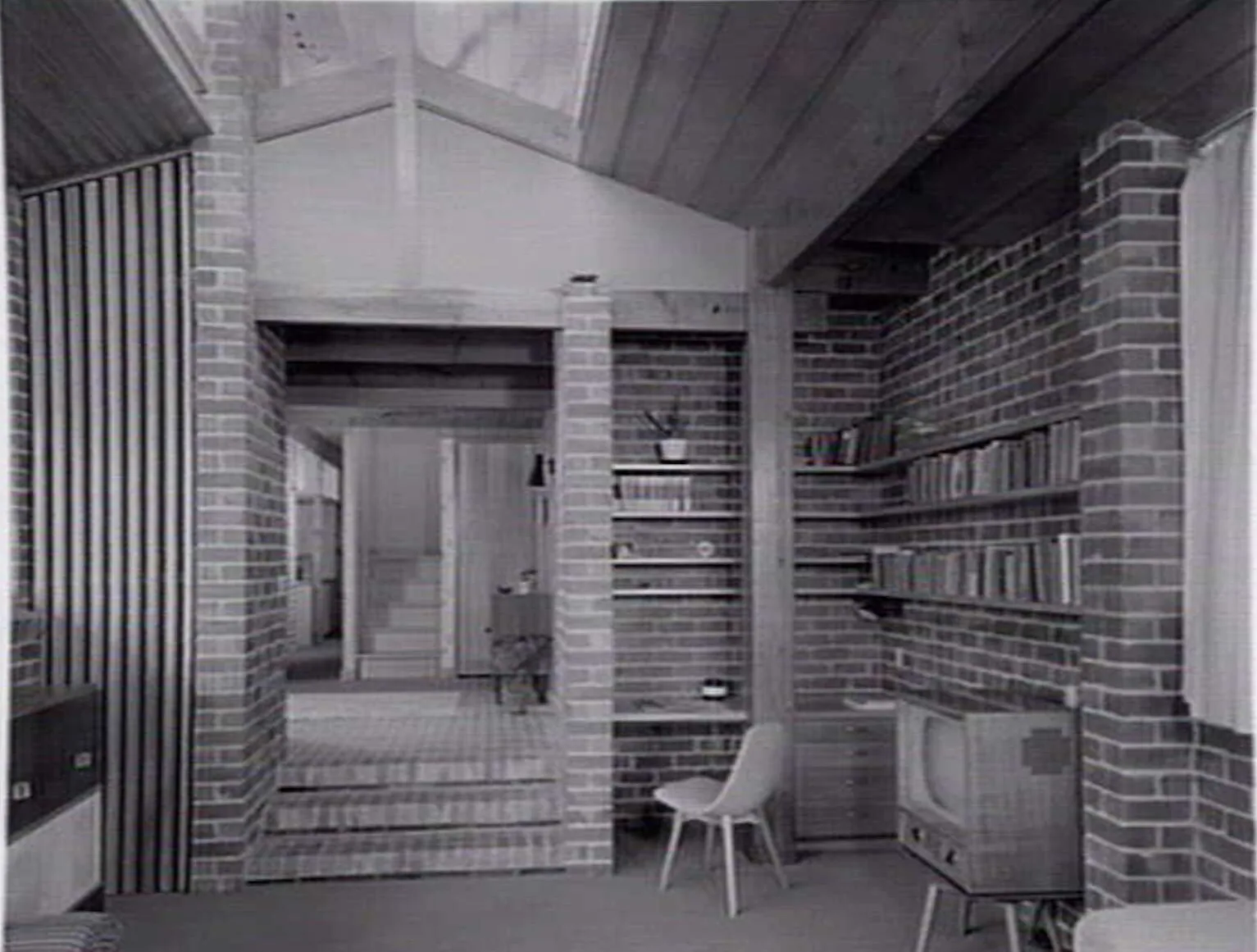
Opening ABV-2, Harold Holt said television “would do much to transform the drudgery of home life”. What it changed first was the lounge room. In September 1956 The Australian Women’s Weekly found the set too often “stuck in a corner” where perhaps a quarter of the room could see it, advised that in houses built “B.T. (Before Television)” it should go on castors with a length of extension cord, and showed the family circle that had faced the fireplace “widened for the fire and TV”. Myer’s furniture controller saw buyers give up the three-piece suite for “a unit-style settee, and a few chairs”, and Melbourne shops sold a TV lamp to throw soft light on the ceiling with the main lamps off, Fler’s TV armchair at 14 guineas and a yard of your own material, and a mobile TV hostess table.
Derham Groves’s TV Houses (2004) follows that change through the furniture catalogues, the magazines, the cartoons and the knitting patterns, in four parts: TV sets, TV dining, TV rooms and TV clothes. Taste-makers, he wrote for the Encyclopedia of Melbourne, “advocated homes that were designed and organised around the demands of watching television”, and people regarded a television aerial on the chimney “as a badge of pride”.
Sources The Argus, 20 November 1956, p. 3; The Australian Women’s Weekly, 5 September 1956, p. 43; The Argus, 6 September 1956, pp. 19, 20 and 27; The Argus, 25 October 1956, p. 19 (Fler); TV Houses, contents, in Trove; J. Hartley, J. Burgess and J. Green, Australian Cultural History 26, 2007; Derham Groves, “Television”, eMelbourne, 2008.
The street below is twenty homes. As each year reaches the middle of the screen, the homes with a television licence have their aerial up. One licence covered every set in a house, so it counts homes; but a rented set was licensed by the firm that hired it out, and an unlicensed set not at all, so the street has, if anything, too few aerials.
1956
Melbourne, November 1956: about 5,000 sets
A fortnight after the opening there were thought to be about 5,000 sets in Melbourne homes, with perhaps 15,000 by Christmas. Most owners had planned parties for the opening night. Sets were short, “an under-the-counter business”, said HSV’s manager, Keith Cairns, and the Olympic Games put the city’s sales up by a tenth.
Sources The Record, 17 November 1956, p. 2; The Argus, 3 November 1956, p. 3; Mount Isa Mail, 19 September 1957, p. 10 (the ANZ Bank’s survey).
1957
Melbourne, 1957: one home in ten
A licence was needed from 1 January 1957, at £5 a year; by 30 June Victoria had issued 44,985. That September an ANZ Bank survey found a set in one home in ten in Melbourne and Sydney, a broadcaster put Melbourne’s figure at 9.7 per cent, and hire-purchase companies were calling television their biggest earner, ahead of refrigerators. The Weekly’s cookery writer was looking for dishes to replace “the familiar sit-down evening meal”: food to be managed “with a fork or fingers” while viewing.
Sources Australian Broadcasting Control Board, Ninth Annual Report, 1956–57, para. 163; Mount Isa Mail, 19 September 1957, p. 10; Pastoral Times, 4 October 1957, p. 8; The Australian Women’s Weekly, 9 October 1957, p. 47.
1961
Victoria, 1961: 51 licences for every 100 homes
At the census on 30 June 1961 Victoria had 790,529 occupied homes, and that day 401,395 television licences. In 1958 a reader told the Weekly of a Melbourne house where visitors were hurried into the TV room and supper came “on individual trays, so that all could go on watching”. Seventeen suburban picture theatres closed in a year, and in January 1963 the Palace in Glenferrie Road, Hawthorn, was the hundredth to go since television came. Wool was sold as “ideal for TV knitting”.
Sources Australian Broadcasting Control Board, Thirteenth Annual Report, 1960–61, para. 136; Commonwealth Year Book No. 49, 1963, ch. XI, p. 400; The Australian Women’s Weekly, 3 December 1958, p. 36; Toowoomba Chronicle, 13 March 1959, p. 2 (“Melbourne Letter”); The Canberra Times, 15 January 1963, p. 2; The Australian Women’s Weekly, 16 March 1960, p. 65.
1966
Victoria, 1966: 72 licences for every 100 homes
At the census on 30 June 1966 Victoria had 889,053 occupied homes, and 640,708 licences. In 1962 Ross Campbell was called from “the TV room (formerly known as the livingroom)”; new plans gave the set a family room, “where the children play, eat, and watch television”, and in 1964 a reader declared a second set “an absolute essential”. That June the Broadcasting Control Board’s own survey of Melbourne families reported the difficulty, in many homes, of “preventing children from watching television after 8.30 p.m.”
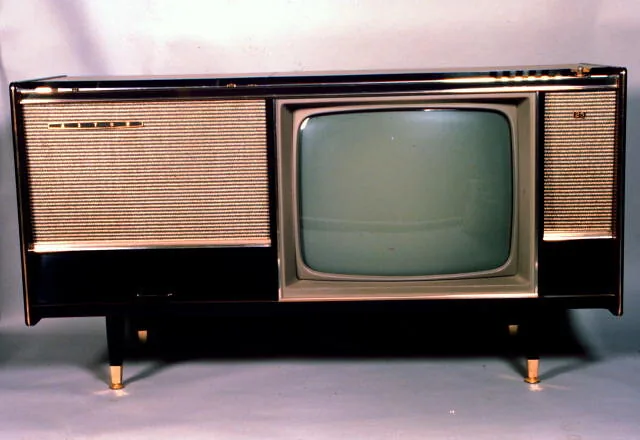
Astor’s 3-in-1, record player, radio and television in one cabinet, made in Melbourne about 1966: designed by Hedley Sanders, the cabinet by Gainsborough. Museums Victoria, ST 41773 (CC BY 4.0) Sources Australian Broadcasting Control Board, Eighteenth Annual Report, 1965–66, paras 249 and 260; Commonwealth Year Book No. 59, 1973, ch. 9, p. 192; The Australian Women’s Weekly, 26 December 1962, p. 2; The Australian Women’s Weekly, 14 September 1966, p. 64; The Australian Women’s Weekly, 14 October 1964, p. 41.
1971
Victoria, 1971: 75 licences for every 100 homes
At the census on 30 June 1971 Victoria had 1,015,485 occupied homes, and 764,954 licences. A study of 1,200 Melbourne pupils in Form II, aged twelve to fourteen, found them watching for nearly three hours each weekday evening, and perhaps one in seven still watching after half past ten. Licences were abolished in the 1974–75 Budget, the last count, at 30 June 1974, being 800,137, so the street ends here.
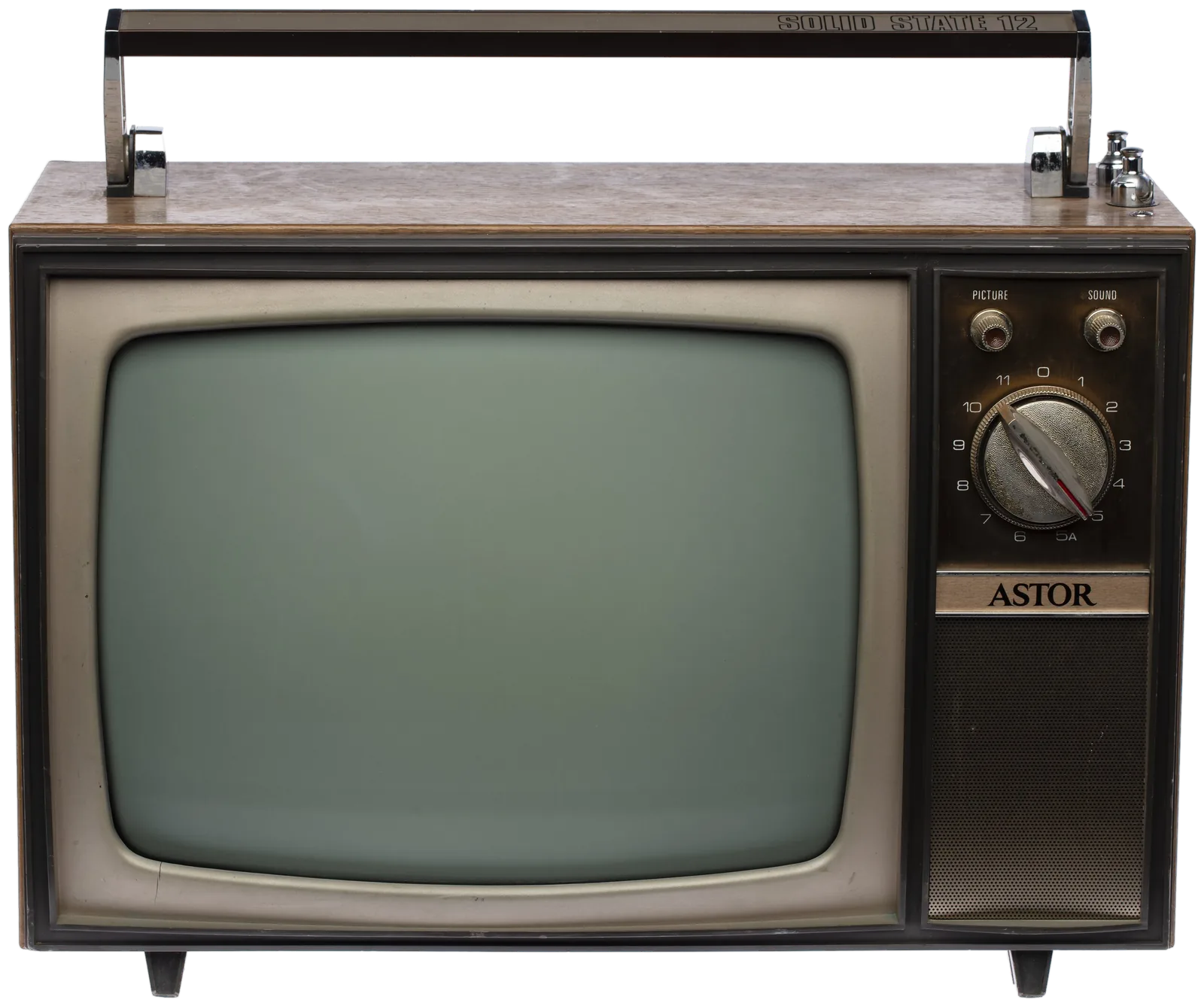
An Astor portable with a 12-inch screen, made in Melbourne, its channel dial running from 0 to 11. Rodney Start, Museums Victoria, ST 37984 (CC BY 4.0) Sources Australian Broadcasting Control Board, Twenty-third Annual Report, 1970–71, para. 51; Commonwealth Year Book No. 59, 1973, ch. 9, p. 192; Australian Broadcasting Control Board, Twentieth Annual Report, 1967–68, para. 367; Australian Broadcasting Control Board, Twenty-sixth Annual Report, 1973–74, para. 56; Australian Broadcasting Control Board, Twenty-seventh Annual Report, 1974–75, paras 4 and 58.
1957–1969 · After school
In Myer’s front window
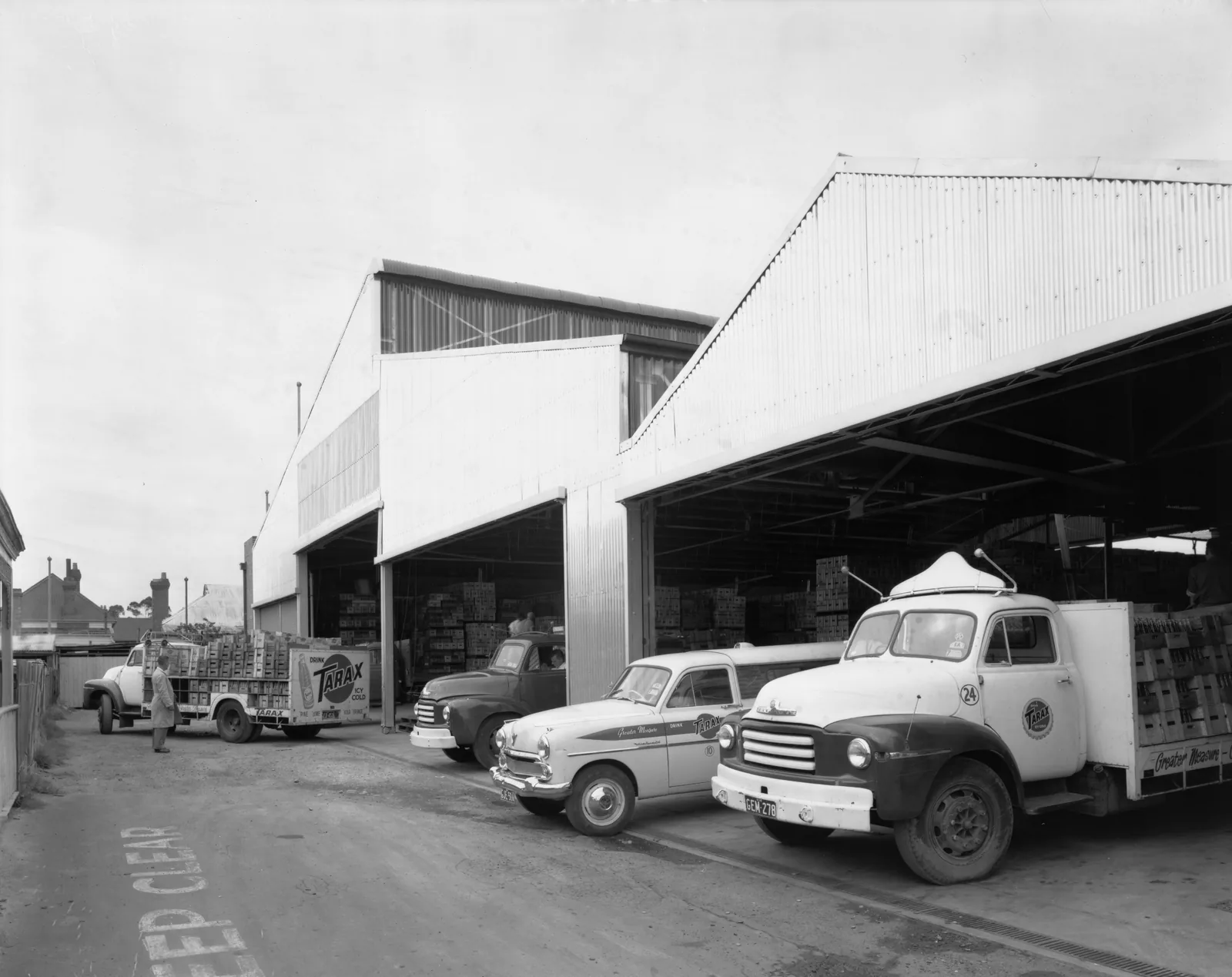
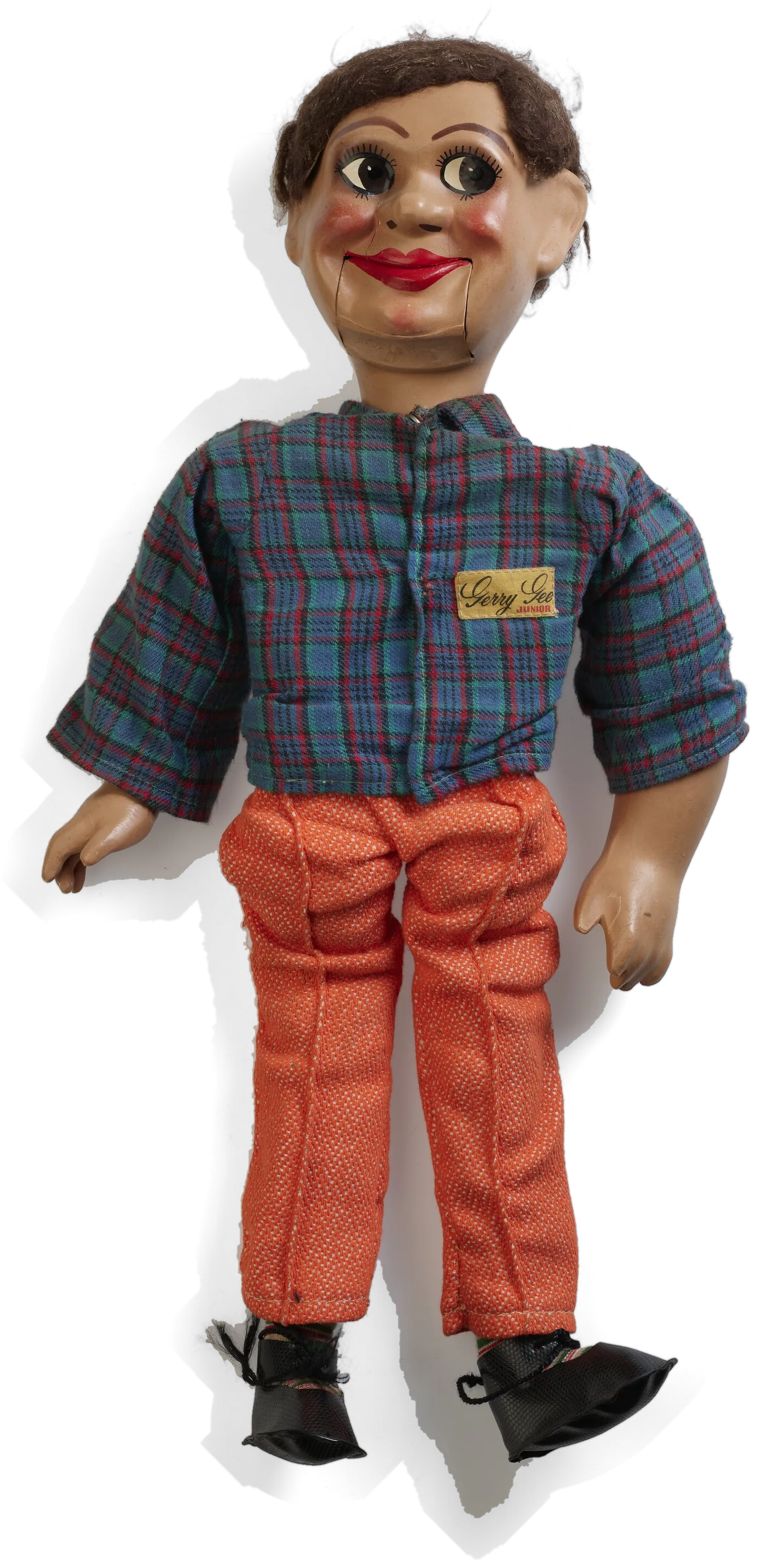
On Monday 21 January 1957, two days after GTV-9 opened, Happy Hammond began The Happy Show in a glass studio built into a ground-floor window of the Myer Emporium in Lonsdale Street: an hour every weekday from half past five, with the ventriloquist Ron Blaskett and his doll Gerry Gee, and Bernard the Magician on Mondays. Children sent their entries to Tarax, the soft-drink makers, at 190 Union Street, West Brunswick, and when the show moved to the studios at Richmond in April it became The Tarax Happy Show. The same day HSV-7 began The Mickey Mouse Club, and in May 1959 seven of the Mouseketeers came out for stadium shows in Melbourne and Sydney.
Is everybody happy?
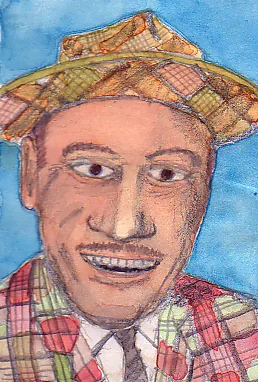
Harry Montague Hammond was forty in 1957, a soft-voiced and gentle-natured man from East Bentleigh who had been a grocer’s boy, an infantryman, an army entertainer, a Tivoli revue actor and for nine years a breakfast announcer. On camera he could click his fingers at high speed, and when he told the children to clean their teeth, Derham Groves writes in his life of Hammond for the Australian Dictionary of Biography, “his sincerity was convincing”. In 1960 he took The Happy Show to HSV-7, where Princess Panda wore a tiara on camera, and he retired from the station in 1983.
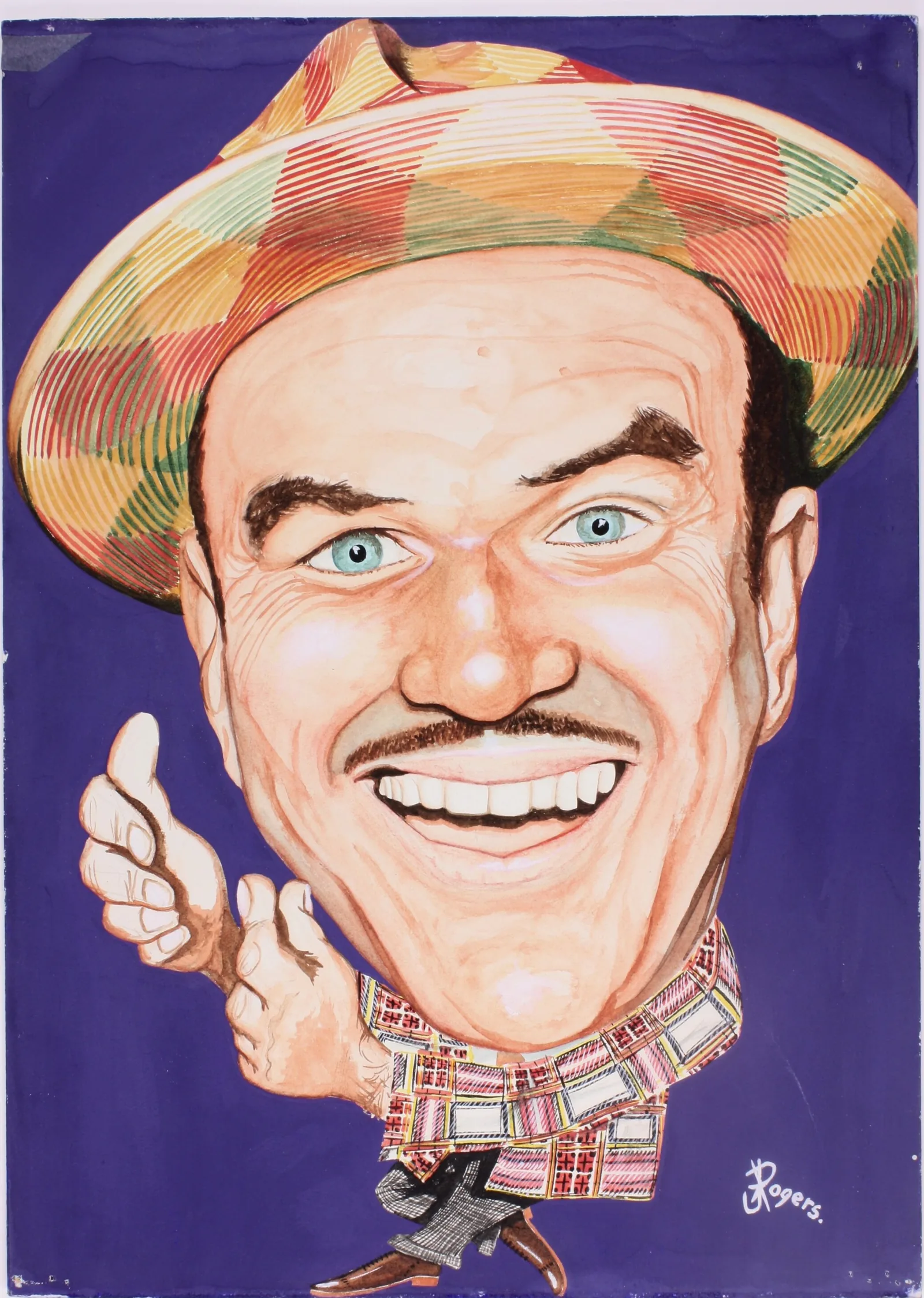
The Tarax Show
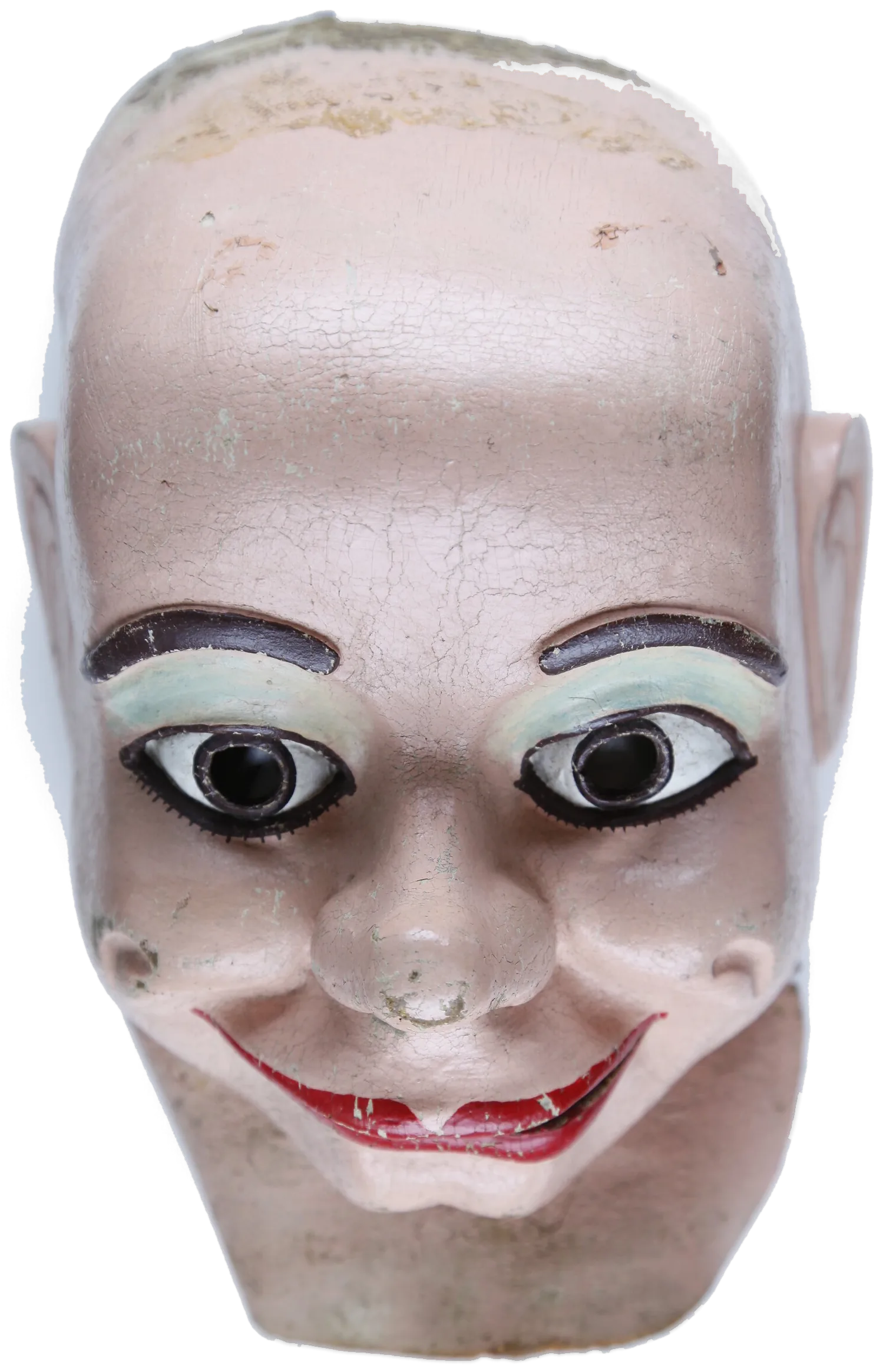
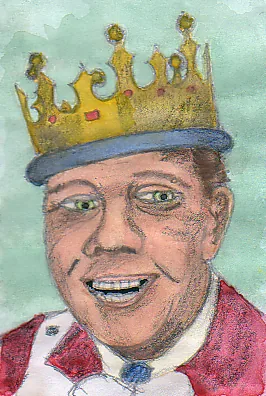
At GTV-9 the show went on without him as The Tarax Show until the end of the 1960s: Geoff Corke as King Corky, Susan-Gaye Anderson its hostess, Joff Ellen as Joffa Boy, Professor Ratbaggy, Patti McGrath, Bernard the Magician, and from 1963 Norman Swain, Uncle Norman of 3KZ. In 1958 Ron Blaskett asked Lionel Sterne, a Carlton doll maker, to make Gerry Gee for sale; the Gerry Gee Junior doll, Museums Victoria says, was the first real piece of television merchandise in Australia, and a sister, Geraldine, followed in 1960.
A glass of milk in Geelong
Derham Groves grew up in Geelong. As a boy he watched Hopalong Cassidy, The Mickey Mouse Club and The Tarax Show “while drinking a glass of milk and eating chocolate-coated Tee Vee Snacks”, and he still finds himself singing a ditty from The Tarax Show: “Who’s that peeping round the corner? Not Jack Sprat or Little Tommy Horner.” He became an architect, he says, because of Wilbur Post in Mister Ed, who worked from home. Hammond’s tartan hat and test-pattern suit, he noted, “clashed awfully in real life but worked well in black and white TV”, and when he saw King Corky’s set in a colour photograph years later he wrote: “What a colourful set for black and white television! We never guessed.”
Hopalong Cassidy, who had told Australians in 1954 to hurry up and get television, was on HSV-7 from its second night; his tour of 1954, and Derham Groves’s books on it and on Whiplash, are on hopalongcassidy.au.
Sources The Argus, 18 January 1957, pp. 30 and 35; The Argus, 18 January 1957, p. 30 (the entry form); Derham Groves, “Hammond, Harry Montague (Happy) (1916–1998)”, Australian Dictionary of Biography, 2022; The Australian Women’s Weekly, 23 January 1957, p. 28; The Australian Women’s Weekly, 22 April 1959, p. 82; The Australian Women’s Weekly, 13 February 1963, p. 17; The Australian Women’s Weekly, 5 September 1962, p. 4; The Chronicle (Adelaide), 21 December 1961, p. 21; The Canberra Times, 8 July 1986, p. 12; Tarax Show, Wikipedia (Joffa Boy, Professor Ratbaggy, 1969); Derham Groves, whittled heads, 2026; Museums Victoria, “Gerry Gee Doll, Melbourne, 1960s”; Derham Groves, “TV’s top ten ear worms, from a television tragic”, The Conversation, 17 August 2016; Derham Groves, “The Day I Met Happy”, 2007 (his addendum); Derham Groves, “More King Corky”, 2008; The Argus, 5 November 1956, p. 3; hopalongcassidy.au.
1996–2026 · Derham Groves
A television tragic
Derham Groves taught architecture at RMIT and then, from 1999 to 2019, at the University of Melbourne. His doctorate is from the University of Minnesota, where his supervisor, Karal Ann Marling, was “a Disney and television scholar, and she spurred my interest in popular culture”. He first wrote on television for Heide’s 1996 exhibition 1956: Melbourne, Modernity and the XVI Olympiad, and TV Houses grew out of that essay. “Like Australian television,” he wrote in 2016, “I also turn 60 this year.”
Book 2004
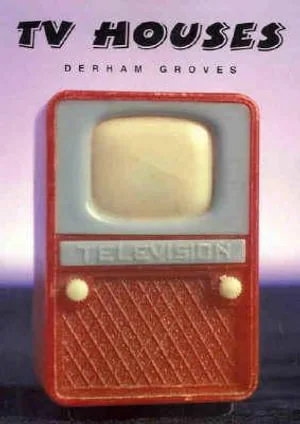
TV HousesTelevision’s Influence on the Australian Home
Black Jack Press, Carlton North. 179 pages and 8 of plates. In four parts: TV sets, TV dining, TV rooms, TV clothes. ISBN 0-9580785-5-6.
Article 2004
“Gob Smacked! TV Dining in Australia Between 1956 and 1966”
The Journal of Popular Culture 37, no. 3, pp. 409–417: the dinner hour, and the set moved into the kitchen or the dining room, wherever the family ate.
Encyclopedia entry 2008
“Television”
For eMelbourne, the Encyclopedia of Melbourne online: the TV divan and the Tele-chair, TV jackets from Collins Street, and the aerial on the chimney.
Exhibition 2016–17
Tee Vee at Sixty
Curated by Derham Groves at the Baillieu Library, University of Melbourne, 2 August 2016 to 30 January 2017: vintage sets playing 500 of GTV-9’s black-and-white news photographs from the University of Melbourne Archives; a 1960s living room with an Astor set, a Hills aerial, a RiteLite TV lamp, a Fler TV chair and a Willow TV tray; and cases on The Tarax Show, The Mickey Mouse Club, the westerns, TV dining and TV knitting. On 21 September 2016 he lectured there on TV Houses.
The Library’s pageThe University’s announcementABC News, 4 August 2016
Catalogue 2016
TeeVee at SixtyCelebrating Sixty Years of Melbourne Television, 1956–2016
University of Melbourne Library. 33 pages; photography by Lee McRae, design by Janet Boschen, edited by Belinda Nemec. ISBN 978-0-7340-5275-9.
Article 2016
“TV’s top ten ear worms, from a television tragic”
The Conversation, 17 August 2016: from 77 Sunset Strip to The Mickey Mouse Club, and the Mortein commercial.
Compiled, with his students 2016
TV Dinner
From his subject Popular Architecture and Design at the University of Melbourne, 327 pages, “to commemorate the 60th anniversary of television in Australia”.
Compiled, with his students 2019
TV Heads of the 1960s
From the same subject, 240 pages, mostly in colour; the National Library files it under wood-carving and caricature.
Australian Dictionary of Biography 2021–24
Three lives
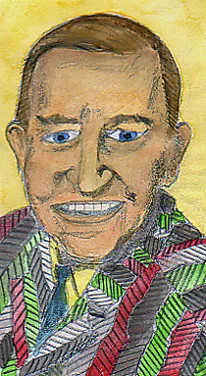
Eric Pearce, who compered HSV-7’s first night and read GTV-9’s news (2021); Happy Hammond (2022); and Norman Spencer, who made In Melbourne Tonight (2024).
Artist’s book 2026
Happy Hammond
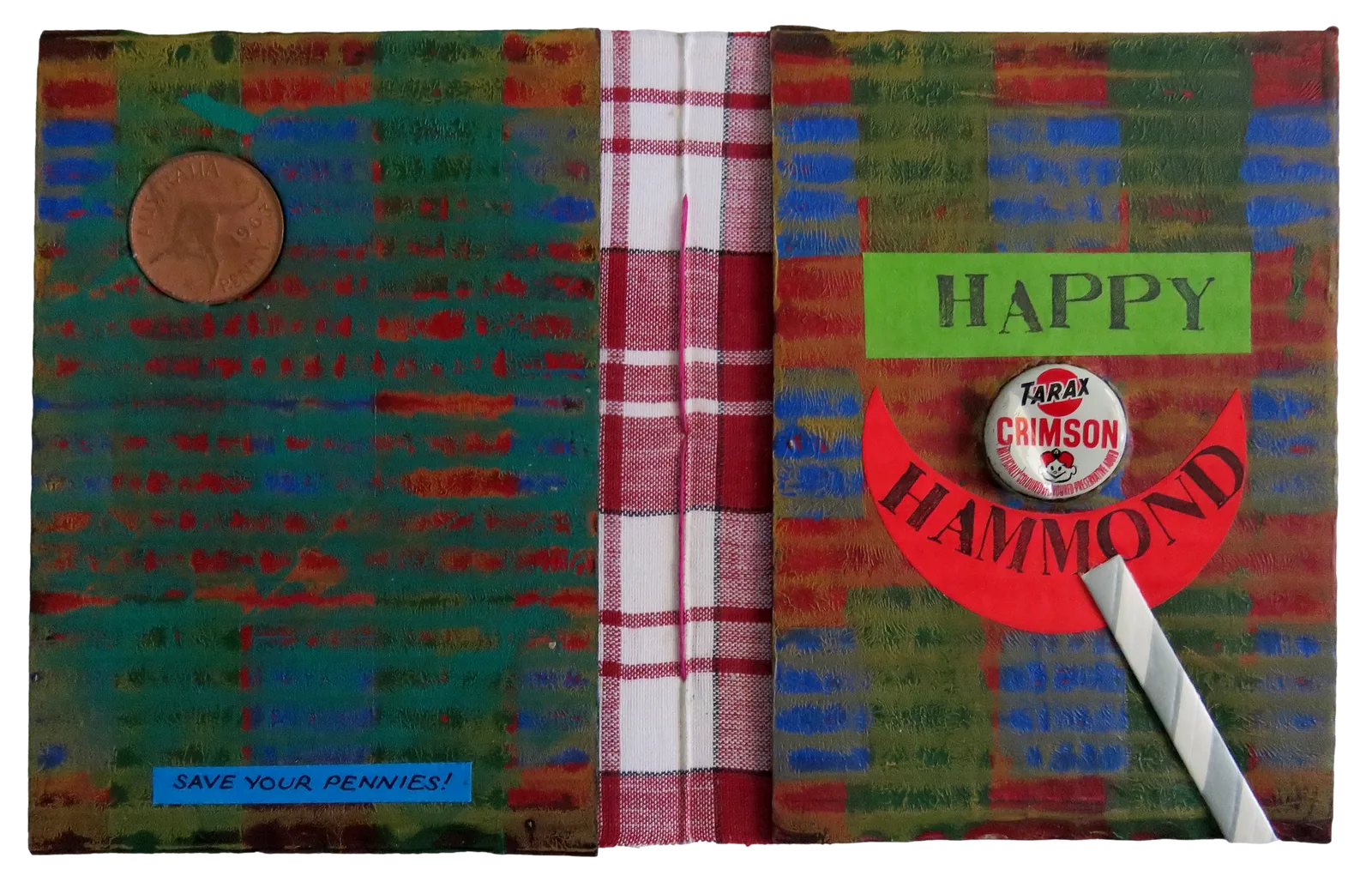
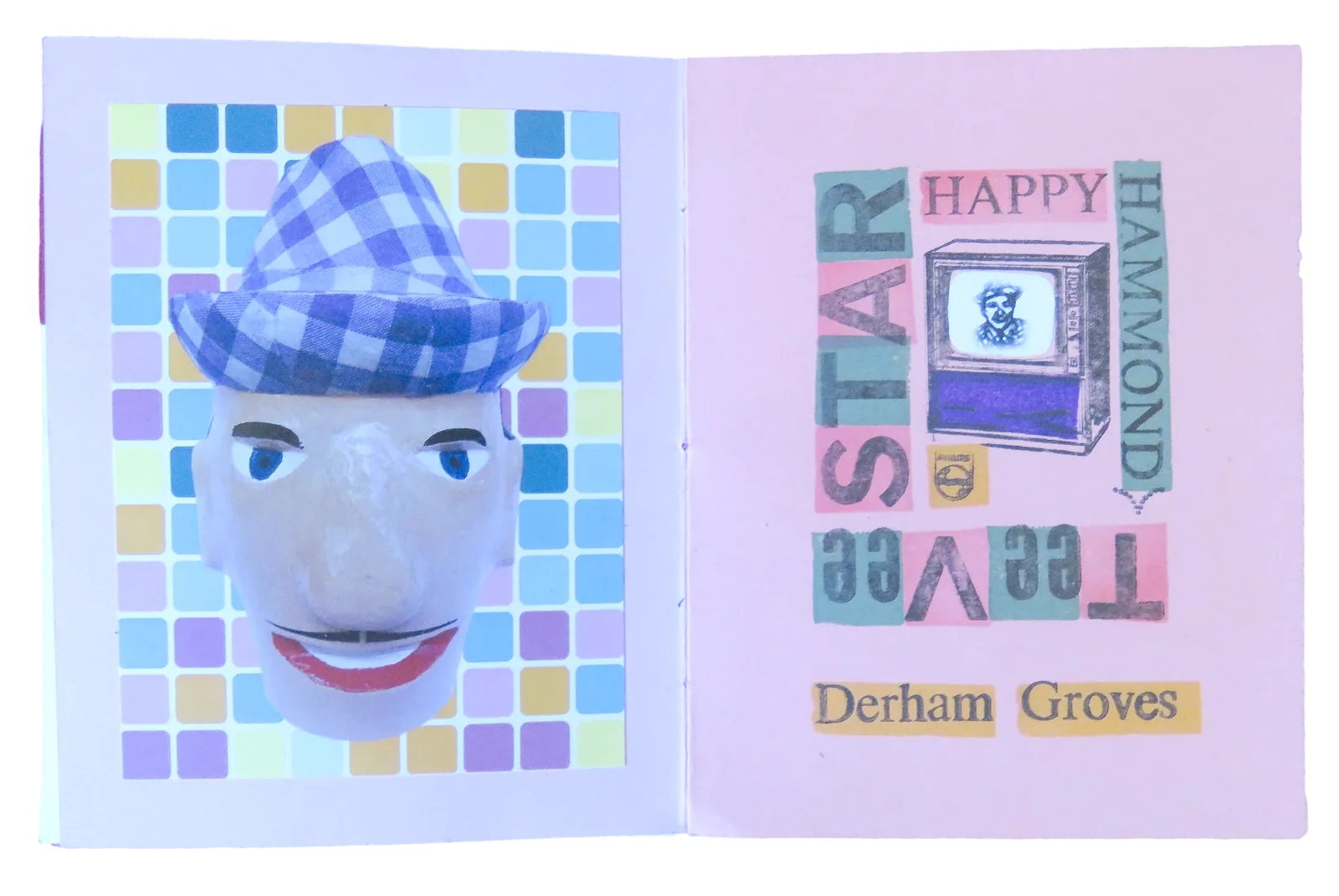
Written, letterpress printed and hand bound at his Black Jack Press, in an edition of 16, with a 1963 penny set in the back cover, a Tarax bottle top in the front, and an A3 broadsheet poem in a pocket inside.
Whittled and painted 2026
Pop Culture Icons
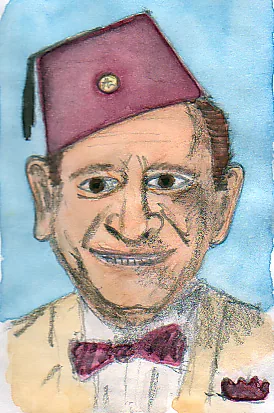
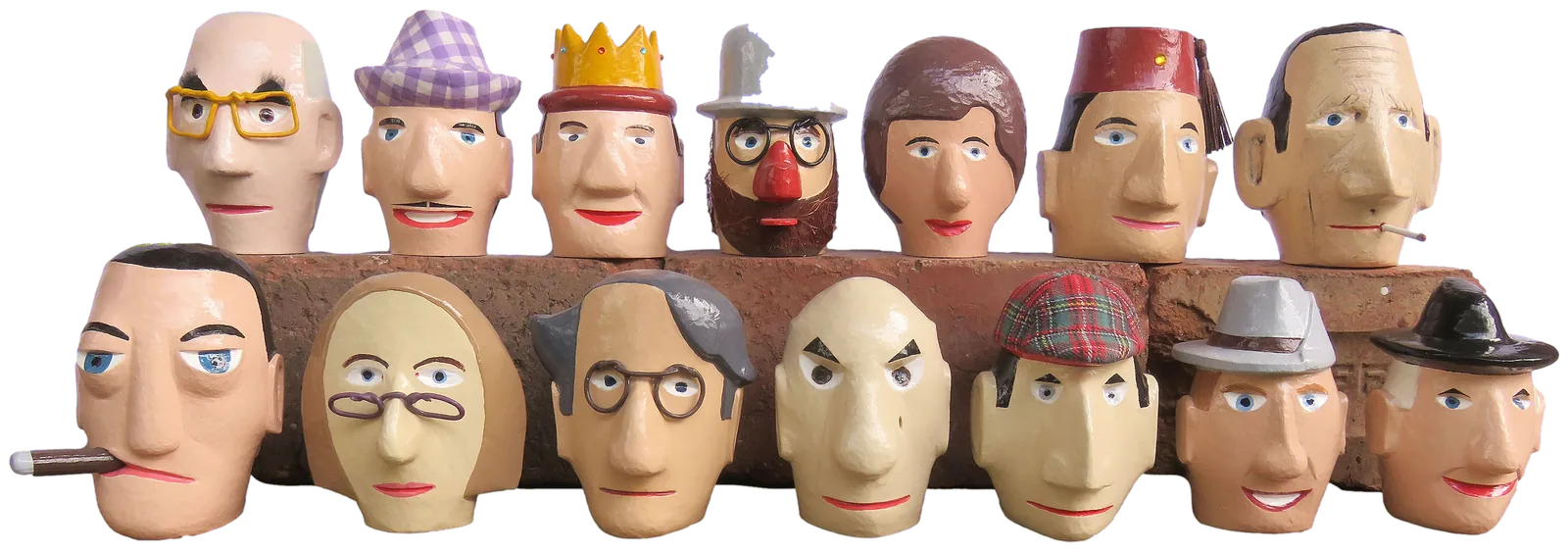
Eric Pearce, and the Tarax Show’s Happy Hammond, King Corky, Professor Ratbaggy, Susan Gaye Anderson and Bernard the Magician, among fourteen heads.
Sources Planning XChange, episode 127, 2025 (his teaching); Derham Groves, “Out of the Ordinary”, 2012 (quoting Voice); J. Hartley, J. Burgess and J. Green, Australian Cultural History 26, 2007, note 13; The Conversation, 17 August 2016; National Library of Australia catalogue; University of Melbourne Collections 18, June 2016.
Sources
Where this comes from
The broadcasting is from the papers of the time, read on the National Library’s Trove, chiefly The Argus, which ran until the morning of GTV-9’s opening; the licences are the Australian Broadcasting Control Board’s annual reports, and the homes are the census as the Commonwealth Year Book printed it; Derham Groves’s own work is from its catalogue records, his Australian Dictionary of Biography lives, his website and The Conversation. Each part names its sources under it. Licences for every hundred homes are worked out here from those two counts: they are not a census of sets. Where the sources disagree, the page goes with the record made nearest the event, and the disagreement is here:
- Who opened ABV-2. The Argus of 15, 17 and 20 November 1956: Harold Holt, at the ABC’s Lonsdale Street headquarters. Robert Menzies opened Sydney’s ABN-2, on 5 November.
- Who spoke at HSV-7’s opening. The Argus of 5 November 1956 names the Premier, Henry Bolte, as the opener and quotes no one. Later accounts (Television.AU, 2016; eMelbourne) add recorded speeches by Menzies and John Cain and live ones from the Lord Mayor and Holt.
- HSV-7’s first words. “We dedicate this station to the full service of the community”, said by Eric Pearce (Groves’s life of Pearce, citing TV Houses; Television.AU); or “To Australian life – the happy families in the homes – we promise to serve you faithfully and well” (Wikipedia, citing The Age of 1 November 1956, three days before the opening). The 1956 papers read here quote neither.
- The first night’s audience. At least 100,000 (Keith Cairns, 31 October), nearly 200,000 (Cairns, 2 November), 200,000 to 250,000 (a wire report on the night), or “anything from 70,000 to 200,000”, “according to the optimism of the guess” (a Melbourne correspondent).
- Melbourne’s first. HSV-7 gave the first regular service, on 4 November 1956; GTV-9 had been on the air with test programmes since 27 September, and Geoff Corke is remembered as the first face it showed.
- The Happy Show’s sponsor. The entry form of 18 January 1957 already reads “sponsored by Tarax”; Wikipedia gives April 1957; Groves’s ADB life has it renamed The Tarax Happy Show after the April move to Richmond.
- Happy Hammond’s birth: 1916 (the ADB, and a National Archives record) or 1917 (an obituary). He moved to HSV-7 in 1960 (the ADB); Museums Victoria says 1961.
- Panda. Panda Lisner was “Panda” of In Melbourne Tonight and Princess Panda of HSV-7’s Happy Show; Patti McGrath, later Patti Newton, was on The Tarax Show. They are two people.
- The Tarax Show’s end: 1969 (Wikipedia) or 1970 (Groves, 2016).
- Spellings: King Corky (the Weekly, 1962, and Groves in 2007–08), King Corkey (Groves, 2026), King Corke (an obituary); Susan-Gaye, Susan Gaye and Susan Gay Anderson.
- The subtitle of TV Houses: “Television’s Influence on the Australian Home” in the catalogue records made from the book; “The Influence of Television on the Australian Home” in some of Groves’s later citations of it.
- Tee Vee or TeeVee. The exhibition is Tee Vee at Sixty in every University source of 2016; the catalogue’s title page has TeeVee at Sixty. This site is Groves’s spelling of the exhibition.
- The sets in Tee Vee at Sixty’s slideshow: two (University of Melbourne Collections, written in May 2016) or three (the University’s announcement on the opening day, which this page follows).
- Groves’s birth year: 1956, in his own words (The Conversation, 2016) and in the State Library’s records; 1962 in some National Library records.
- The Astor portable’s date. Museums Victoria catalogues it about 1957; the page gives it no year.